
Cadence Protocol Explained: Intent-Centric Perpetuals Aggregator
Exploring the work of a perpetuals aggregator that seeks to address liquidity fragmentation with an Intent-Centric RFQ Architecture and extensive use of Account Abstraction

Disclaimer: The content presented in this article, along with others, is based on opinions developed by the analysts at Dewhales and does not constitute sponsored content. At Dewhales, we firmly adhere to a transparency-first philosophy, making our wallets openly available to the public through our website or DeBank, and our articles serve as vehicles for self-expression, education, and contribution to the ecosystem.
Dewhales Capital does not provide investment advisory services to the public. Any information should not be taken as investment, accounting, tax or legal advice or as a recommendation to purchase, sell or hold or to pursue any investment style or strategy. The accuracy and appropriateness of the information is not guaranteed by Dewhales Capital.
Introduction
1. Liquidity Fragmentation Problem
- Problem caused by liquidity fragmentation
2. Cadence’s Architecture
- Intent-Pooling Engine (IPE)
- Cadence Symphony, Proof-of-Lock
3. Seamless Perpetuals Trading
- Contract Secured Revenue
- Liquid Staking Derivatives
- RWAs as Collateral
4. Utilizing Decentralized Keepers
5. Cadence Tokenomics
- Allocations
- Floor Price Fund of Cadence Protocol
6. Involved Players
Conclusion
Introduction
Blockchain intents are a new paradigm in blockchain technology that aims to simplify and streamline user interactions with blockchain applications. Unlike traditional blockchain systems where users must provide detailed, step-by-step instructions for their transactions, intents allow users to express their desired outcome in a more declarative manner. This shift from prescriptive to declarative interactions is enabling a more user-friendly and intuitive experience for blockchain users.
Intents focus on defining the desired outcome rather than specifying the exact steps to achieve it
Once an intent is created, it can be delegated to specialized agents or "solvers" to execute the necessary actions on the blockchain. This offloads the complexity of transaction management from users
Intents can be used for a variety of tasks, from simple token transfers to complex financial applications. They can also be reused across different blockchains, enabling seamless interoperability.
In this article, we will delve into the intricacies of Cadence and its integration with Canto Blockchain, exploring how this intent protocol is simplifying blockchain interactions and ushering in a new era of user-friendly blockchain applications with the stable tokenomics model.
LBP IS LIVE NOW (22.01.2024 - 25.01.2024)
As we speak, from today 22.01.2024 the LBP is live and will be there until 25.01.2024 on FjordFoundry. You can use our link to join it, or create your own personal referral to earn: Dewhales link
Now let's delve into Cadence.
1. Liquidity Fragmentation Problem
In the world of crypto, liquidity is one of the most important things. It's the main component of trading, ensuring smooth buy and sell orders without significant price impact. But in this decentralized space, a challenge arises: liquidity fragmentation. Lots of liquidity is scattered across different exchanges, protocols, blockchains, and so on. Fragmented liquidity can lead to price discrepancies across different platforms, hindering accurate price discovery.
Over the last two years, liquidity has become extensively scattered across various blockchain networks. Ethereum's dominance has decreased to almost 50% since 2021, and with the emergence of new chains almost daily, the fragmentation of liquidity is expected to grow exponentially over time.
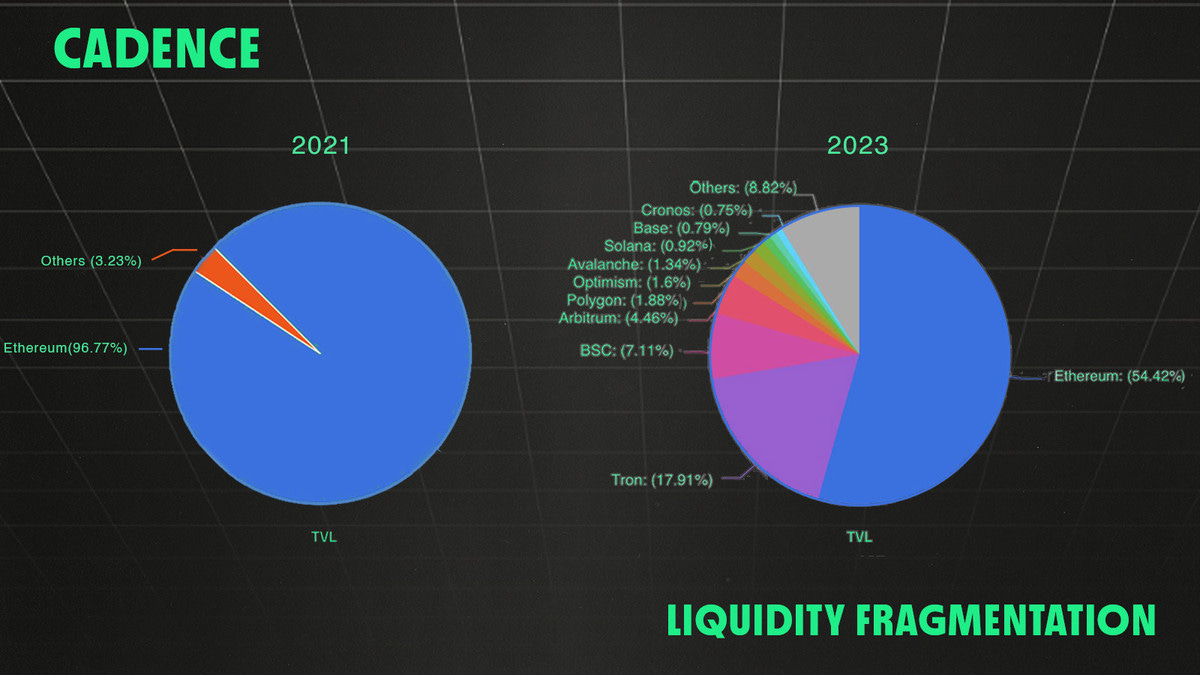
Cadence's intent-based trading architecture aims to unite the liquidity across various chains and protocols, providing an on-chain trade execution at minimal costs.
Problem caused by liquidity fragmentation
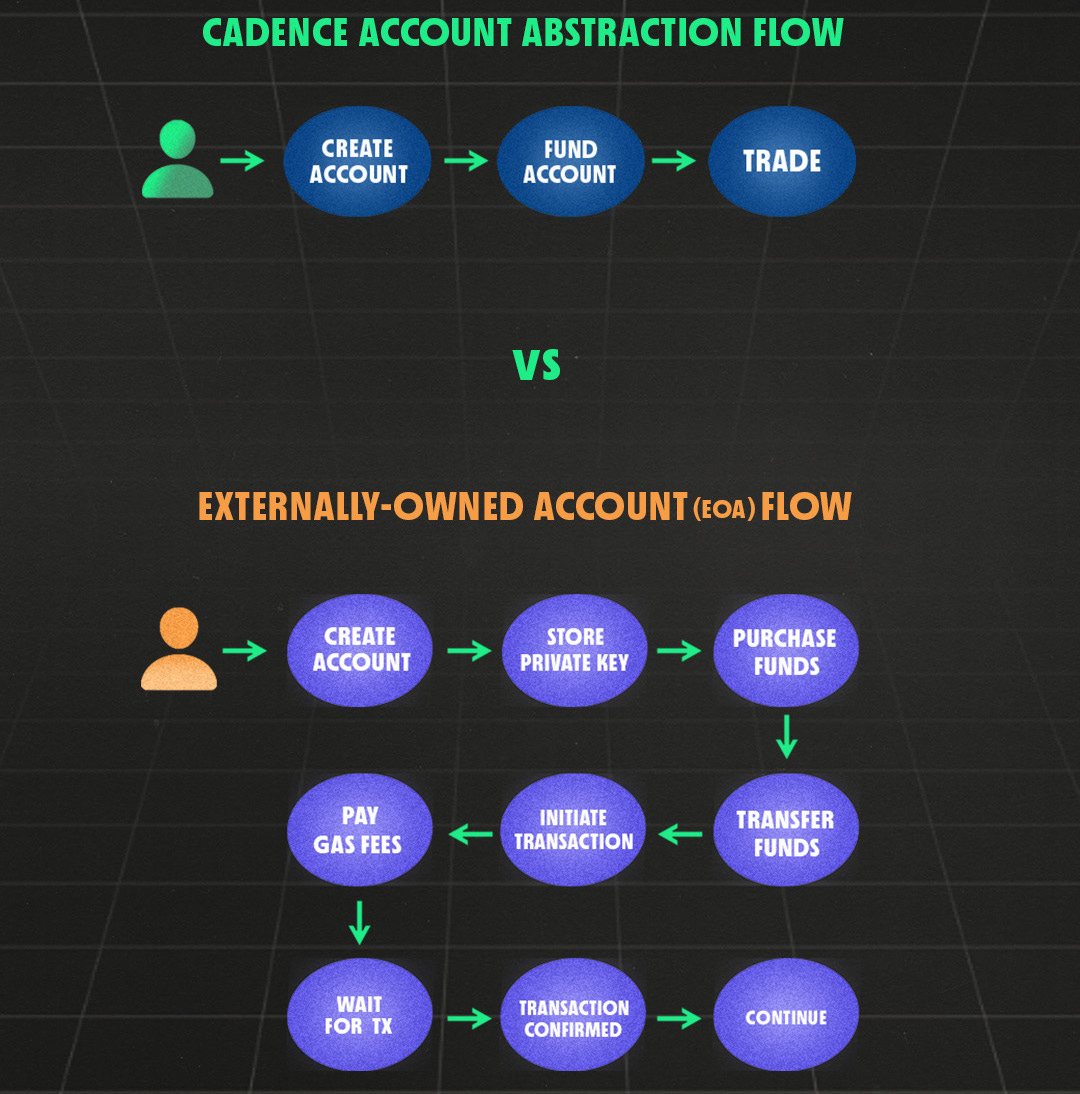
As liquidity is fragmented, it creates lots of pain points for the end users related to the UX/UI functionality. You have to buy the ETH from CEX, move it to the self-custodial wallet, use a bridge to move to L2, swap it there, finally use perpetual dapp and confirm a couple transactions there. In a perfect world, that should not happen. User shouldn’t use bridges, swaps, etc, in fact he doesn’t even have to know about it, the whole architecture process should be hidden.
Cadence is abstracting all of these steps thanks to its architecture. End user wouldn’t know that he is using the bridge, the swap, confirms multiple transactions. But how exactly Cadence is doing it? Let’s explore it in the next section.
2. Cadence’s Architecture
Cadence’s Architecture is Intent-Based and it consists of 2 main components: Intent-Pooling Engine (IPE), which allows access to recently propagated Intents and Proof-of-Lock Mechanism. Let’s explore both of them.
Intent-Pooling Engine (IPE)
The Cadence Intent-Pooling Engine (IPE) operates as a hybrid-permissionless platform, allowing Solvers to tap into recently disseminated Intents. To gain whitelisted status within this execution network, Solvers need to stake tokens. This stipulation serves to counteract common DoS attack vectors associated with permissionless intent pools. Consequently, a game-theoretical model emerges, motivating Solvers to furnish optimal solutions while discouraging any malicious actions, such as providing suboptimal solutions to exploit MEV or launching DoS attacks on the IPE.
Solvers earn fees in native tokens for the positions they create on behalf of Users. To ensure trustless payment, collateral is securely locked through the Proof-of-Lock mechanism (explained in the next section). Staked positions for becoming a solver carry the risk of being slashed, serving as a barrier against malicious behavior such as providing suboptimal solutions or attempting DoS attacks on the IPE. This encourages Solvers to prioritize Users' best interests and offer truly optimized execution paths.
Cadence Symphony, Proof-of-Lock
Solvers engage in constant competition to identify optimal execution paths for User Intents. Upon discovering the optimal intent, Cadence smart contracts verify it. Subsequently, the User's funds are securely locked on the native chain where the trade originated, enabling the Solver to execute the position on behalf of the User's Account Abstraction (ERC-4377) based wallet.
Account Abstraction, a key feature in the Intent-Centric Architecture, empowers Solvers to manage positions for Users without requiring Users to surrender control. With Account Abstraction, Users can impose constraints on their account, granting specific permissions to Solvers (e.g., funding positions) without revealing private keys. Cadence supports traditional login methods via Multi-Party Computation, allowing Users to access their accounts securely using a combination of methods like Email, Social Media, 2FA, etc., and combining key shards for smart account access.
After successfully executing the transaction for the User, the Solver furnishes proof of creating the position and can redeem the User's locked funds, including the initial collateral used on the User's behalf, along with any agreed-upon fees owed to the Solver.
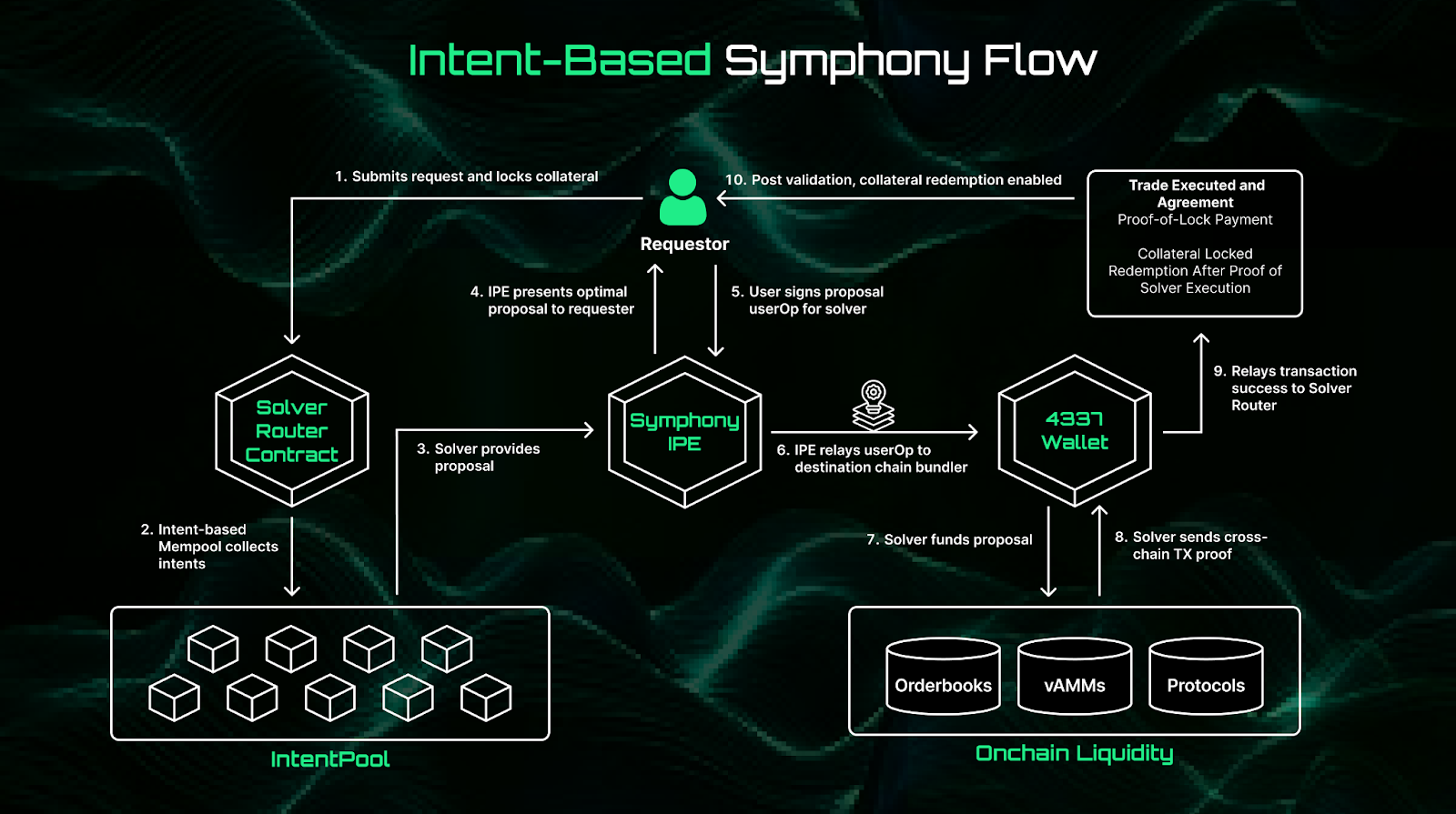
In this way, Solvers form a hybrid network. In this case, an analogy can be drawn with validators, with the exception that validators staking their funds to ensure the economic security of the network and prevent it from being hijacked, while Solvers in Cadence use their funds to ensure that positions and prices are calculated correctly. Solvers earn native token fees based on positions they create on behalf of Users and compete with each other for incentives and rewards to return users to the optimal execution path. Symphony is scheduled for launch in Q3 2024.
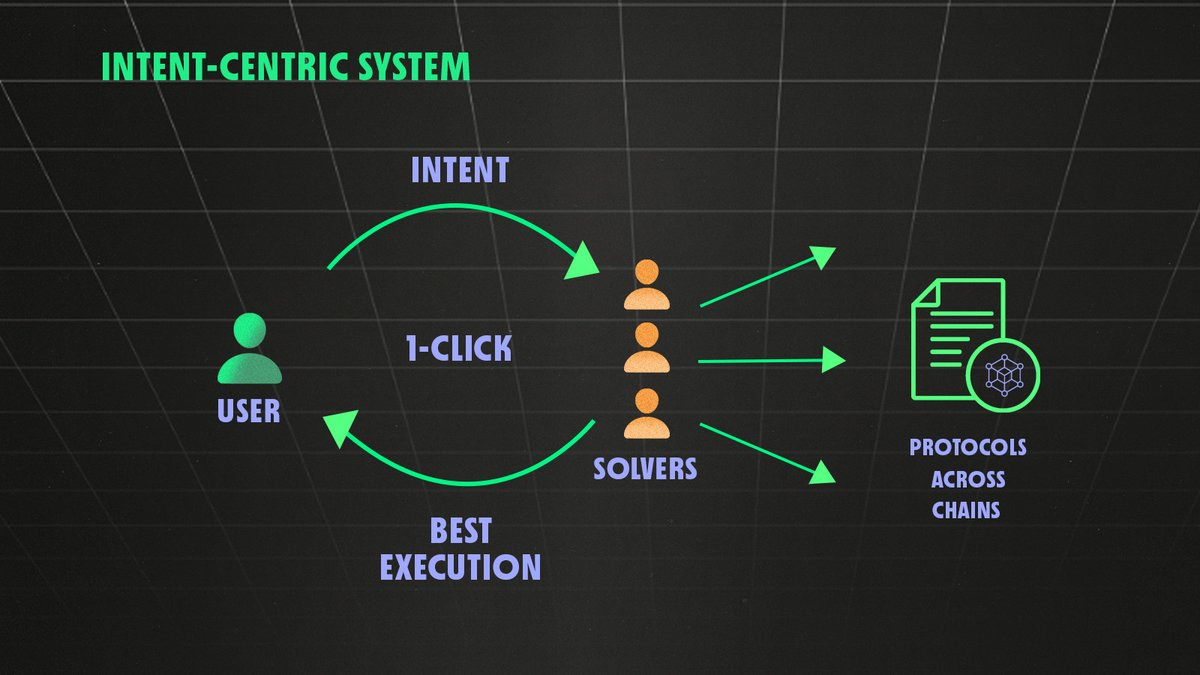
In addition, this architecture, together with the use of Account Abstraction, lays the foundation for a protocol that can combine fragmented liquidity from different chains and protocols. Account Abstraction will allow Solvers to execute positions on behalf of a wallet with AA in different chains. And already after executing the transaction and providing proof of position creation, Solver will be able to redeem the user's funds with the commissions due. Also, the use of AA can significantly improve the UI/UX for users, improve flow and reduce the number of actions performed in the protocol:
3. Seamless Perpetuals Trading
Many decentralized perpetual protocols rely on liquidity pools where liquidity providers (LPs) lock assets, earning an index token tracking pool performance. LPs serve as counterparties, sharing in trading fees and bearing PnL against traders.
Cadence's multi-asset pool (CLP) establishes micro-economies akin to GMX's GLP, fostering auto-compounding and leveraged yield. This strategy attracts more liquidity, fortifying Canto's ecosystem and increasing Cadence's overall TVL. Cadence Protocol integrates 3 key features:
Contract Secured Revenue (CSR)
Liquid Staking Derivatives (LSDs)
RWAs as Collateral
Contract Secured Revenue
Canto incorporates a fee split model known as Contract Secured Revenue through the x/CSR module. In Cadence, CSR enables users to receive a portion of transaction fees incurred during interactions with Cadence smart contracts. These fees are then redistributed to Cadence stakers, offering additional yield and incentives.
Liquid Staking Derivatives
Liquid staking derivatives provide stakers with a way to earn yield while preserving the liquidity of their staked assets. When staking $CAD, LSDs are issued as IOUs, maintaining a 1:1 value relationship.
LSDs automatically accumulate yield, eliminating the need for gas fees when withdrawing staking rewards, make sure to check our full report on LSD Ecosystem. On Cadence Protocol, users can access liquidity on staked assets and use them as collateral for trading and staking. This allows users to earn additional yield in other DeFi protocols while their tokens are locked up and earning staking rewards.
RWAs as Collateral
Cadence Protocol stands as a prime avenue for users to earn additional yield on their $cNOTE (tokenomics will be explained in the next section) and future Canto RWAs. This enhances capital efficiency and bolsters liquidity for Cadence's CLP pool, offering traders the opportunity to earn interest on their collateral.
The multi-asset pool primarily features $cNOTE as its stablecoin, ensuring a ~5% yield irrespective of trading volume or market conditions. This yield is further compounded by Cadence's CSR earnings.
4. Utilizing Decentralized Keepers
Automated systems known as keepers carry out designated tasks on a blockchain network, eliminating the need for human involvement. Specifically applied to DeFi protocols, keepers monitor market conditions and execute transactions based on predefined criteria. These tasks encompass providing liquidity, settling trades, and liquidating positions. Keepers automate intricate processes, enhancing efficiency, lowering costs, and contributing to the prevention of market manipulation.
In other decentralized perpetual protocols, Keepers are currently controlled by the team's externally owned accounts (EOAs). Ideally, keepers enhance efficiency, maintain price data accuracy, and prevent frontrunning. In collaboration with Redstone, Cadence has developed a system that retains these advantages while avoiding potential dangers associated with centralization.
Cadence’s keepers interface with a CadenceKeeperAdapter contract developed by Redstone. Anyone can submit price data to the function, accompanied by signed approved oracle data. This initiates a secure extraction of oracle data and the execution of the contract.
5. Cadence Tokenomics
The tokenomics of Cadence are designed to maximize benefits for CAD token holders, serving as the primary utility and mechanism for capturing value in the project. As Cadence progresses, the value of the CAD token is expected to rise, driven by additional use-cases resulting from Symphony integration. With CAD token you can:
Receive a 100% of fee revenue
Participate in governance mechanism
Get staking benefits such as increased incentives and rewards
Receive referral program rewards
The Cadence staking system is strategically designed to cater to the community of long-term holders, ensuring optimal value capture and sustainability for those committed to staking over an extended period.
Upon staking CAD, you will receive a staked esCAD token, reflecting your total staked amount, including any esCAD tokens and Multiplier Points.Staked CAD not only earns Escrowed CAD but also accrues Multiplier Points and CANTO Rewards.
Similar to regular CAD tokens, esCAD can be staked to earn rewards. This allows the holder to accumulate the same amount of Escrowed CAD and WCanto rewards for each staked Escrowed CAD token. Alternatively, esCAD can be vested to convert into actual CAD tokens over a one-year period. It is essential to note that the amount of CAD or CLP required to vest esCAD is unique per account and is capped to the rewards obtained by that specific account.
A notable aspect is that 30% of fees generated from swaps and leverage trading are converted into CANTO and allocated to staked CAD tokens. If you choose to stake on Canto, you will receive CANTO accordingly.
Allocations
The rise in circulating supply depends on the quantity of tokens vested and those allocated for marketing/partnerships. The projected maximum supply is set at 250 million CAD Tokens. Minting beyond this limit is governed by a 28-day Timelock, which would be invoked only if additional products are introduced, necessitating liquidity mining. The allocations of the supply look in the following way:
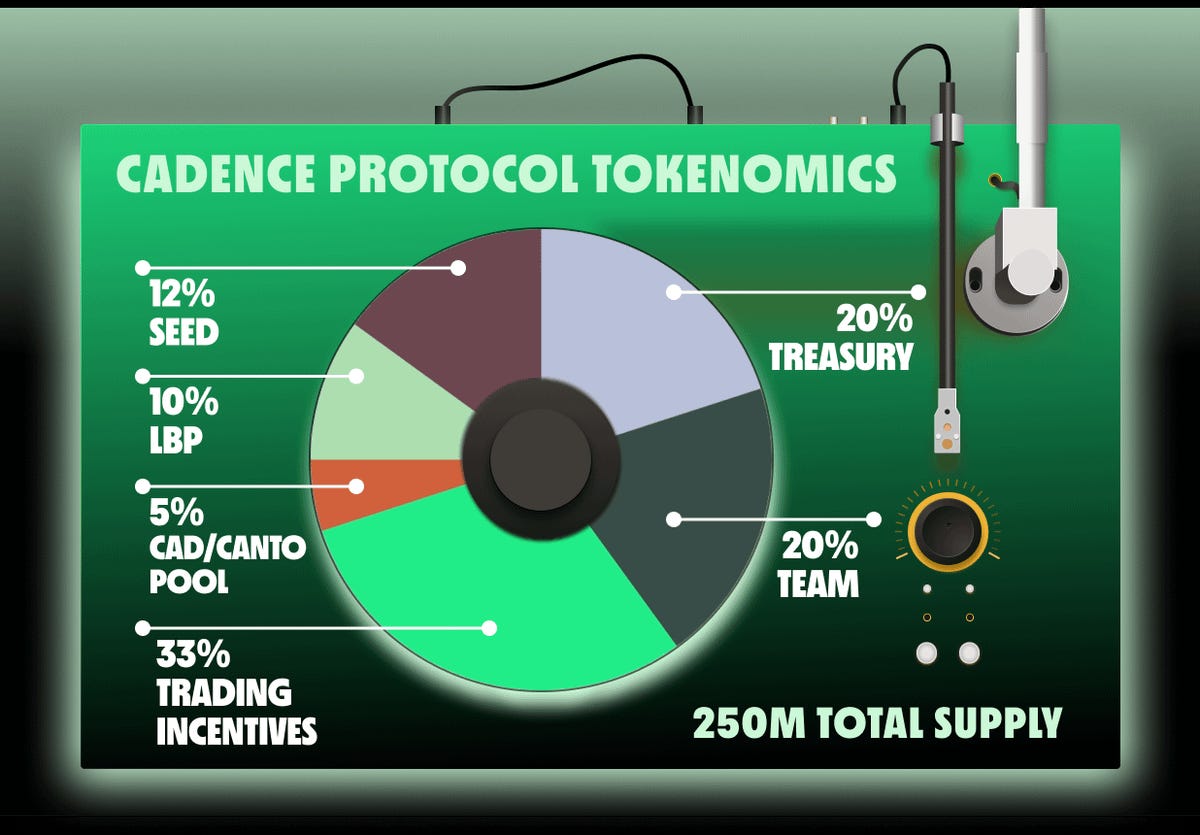
Trading Incentives will be deployed through inventive initiatives, starting with a referral airdrop during our LBP. The front-loaded incentives serve not only to reward users but also to provide long-term protection. As the token functions as a yield-bearing asset, holders and stakers will receive increased rewards to counteract potential sell pressure.
The treasury is allocated for diverse long-term project functions, such as staking a portion as esCAD to generate a sustained income and accumulate reserves for protocol-owned liquidity; deployment in marketing, grants programs, liquidity provision, partnerships, exchange listings, etc.
Floor Price Fund of Cadence Protocol
The CAD token incorporates a floor price fund in CANTO and CLP. Liquidity for CAD/CANTO is provided and managed by the protocol, with trading pair fees converted to CLP and deposited into the floor price fund. CSR rewards also contribute to this fund.
The floor price fund serves to maintain CLP liquidity and generate a consistent stream of CANTO rewards for all staked CAD. As the fund expands, it can be utilized to purchase and burn CAD when the (Floor Price Fund) / (Total Supply of CAD) ratio falls below the market price. This ensures a minimum CAD price concerning ETH and CLP.
6. Involved Players
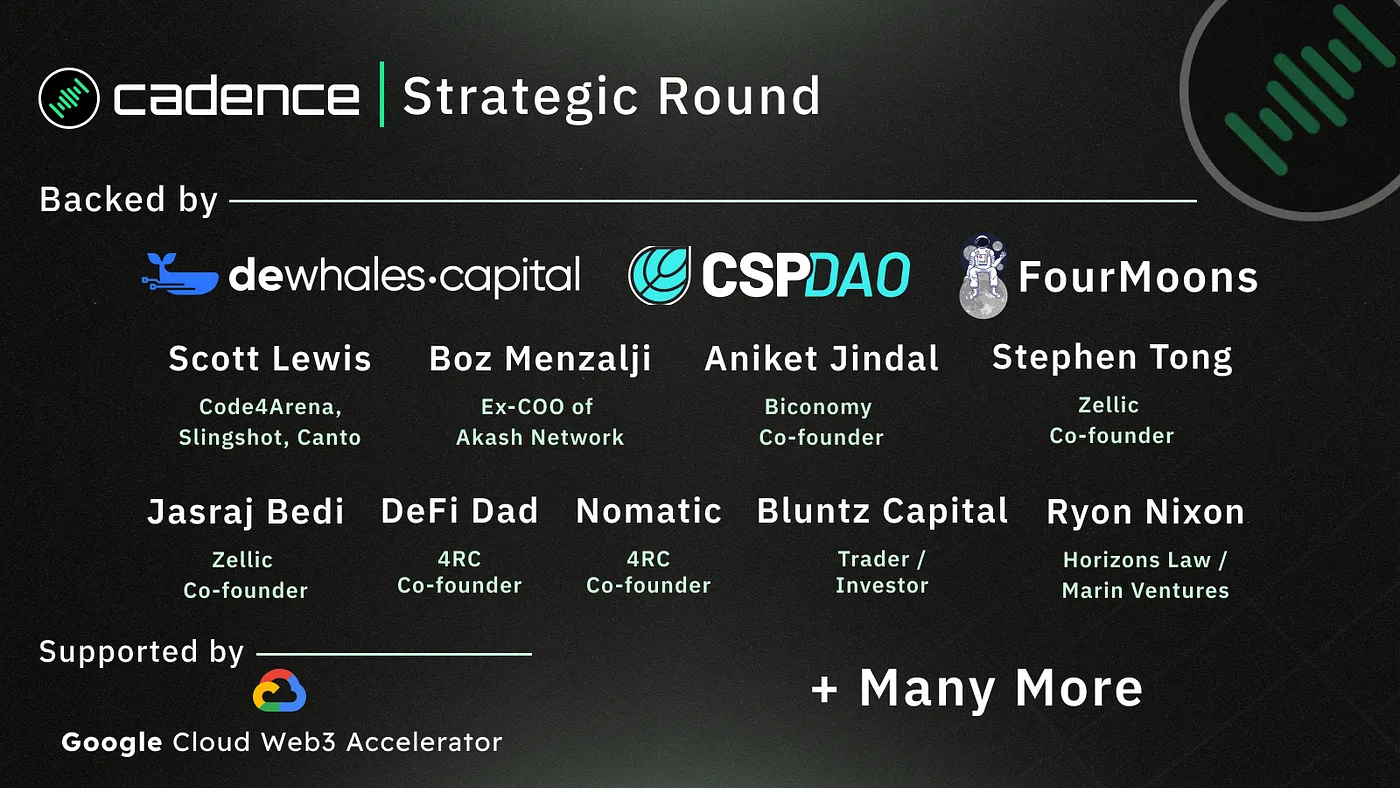
Cadence’s backers include organisations and angels such as: Dewhales Capital, CSP DAO, Four Moons, Bluntz Capital, Scott Levis - founder of Code4Arena / Canto / Slingshot, Boz Menzalji - Ex-COO of Akash Network, Zellic Co-Founders Stephen Tong and Jassraj Bedi, Ryon Nixon from Marin Ventures, co-founders of 4RC DeFi Dad and Nomatic and others.
Conclusion
We explored the fundamental features of the Cadence Protocol, shedding light on how it bolsters the Canto Ecosystem through its intent-centric architecture and the utilization of decentralized keepers. Additionally, we highlighted Cadence's distinctive tokenomics model, showcasing its capability to address the UX/UI problem and liquidity fragmentation issues prevalent in the crypto space. Plus, it's worth noting that Cadence has prospects for further development due to the fact that its symphonic infrastructure will connect all the chains, protocols, etc. together, allowing all bridges, wallets and chains to be abstracted for users, allowing them to trade any asset on any chain with fast execution speeds.
Cadence Protocol links:
Website | Twitter | Discord | Documentation | Medium